Ios Uninstall Tracking (APN)
Choose your SDK version below:
- Apptrove SDK → Recommended for all projects (Latest: v2.x.x)
- Trackier SDK → Will be deprecated in August 2026 (v1.x.xx)
Use the tabs below to view APN uninstall tracking code for your chosen SDK.
Overview
Track app uninstalls using Apple Push Notification Service (APNs) to measure user retention and optimize your campaigns.
iOS uninstalls take 9+ days to appear in reports due to Apple Push Notification service.
Prerequisites
- iOS 10.0 or higher
- Xcode 12.0 or later
- Apple Developer Account
- Apptrove Flutter SDK version 1.6.x+ installed
Step 1: Request Certificate in Keychain Access
1.1. Open Keychain Access on your Mac.
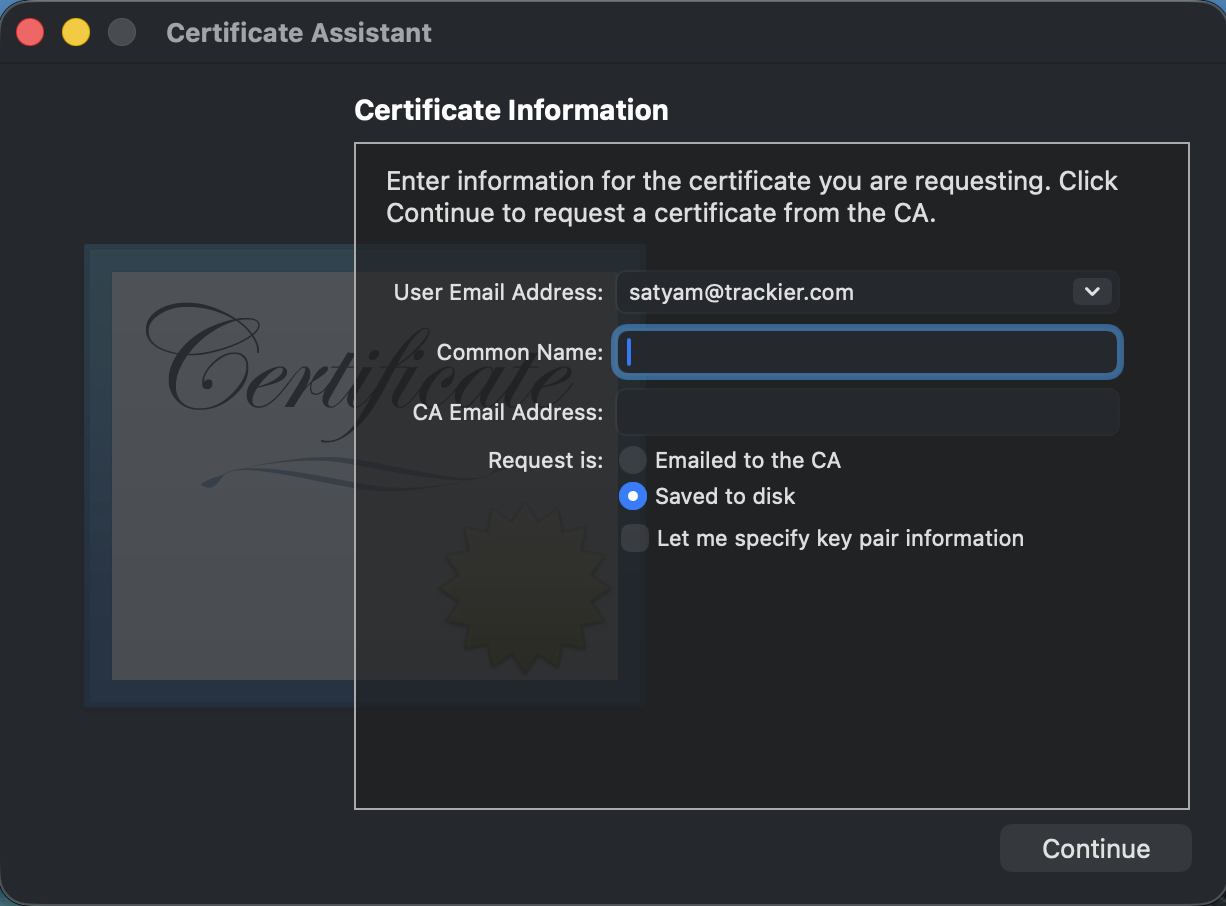
1.2. Go to Keychain Access > Certificate Assistant > Request a Certificate From a Certificate Authority.
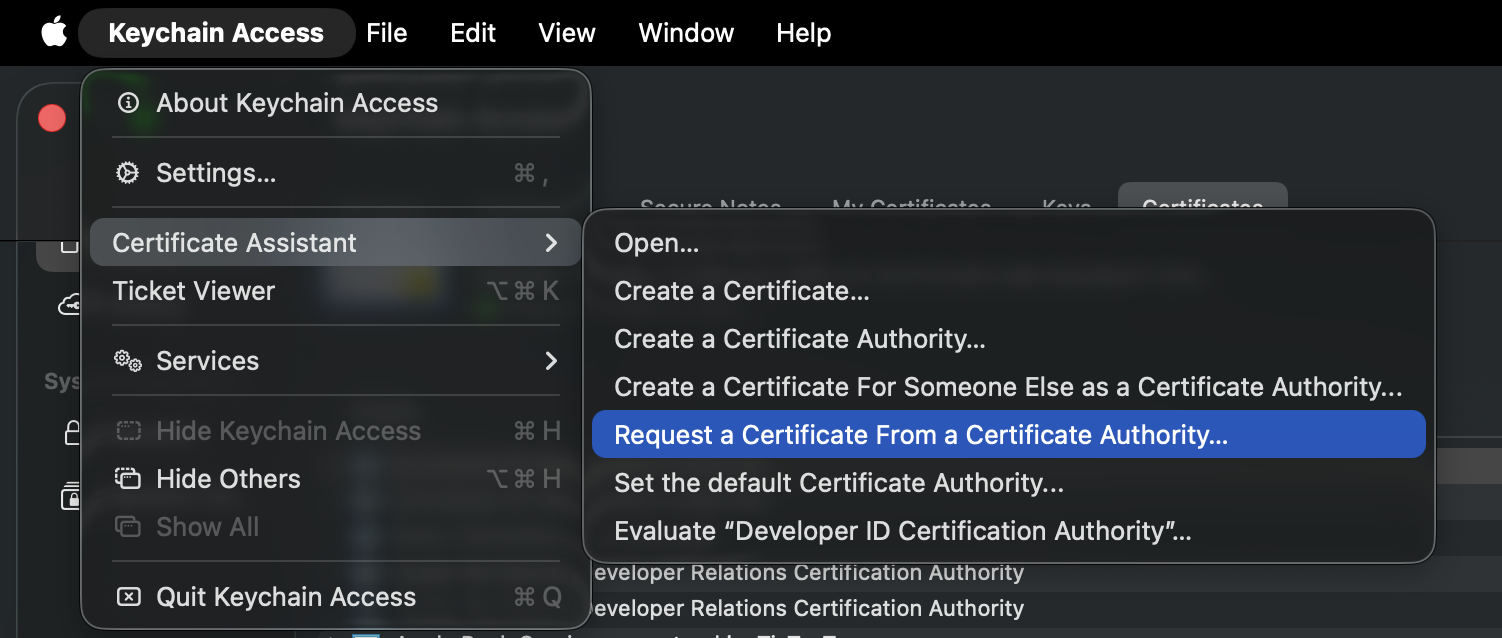
1.3. Fill in the form:
- User Email Address: Your email
- Common Name: Your name
- Request is: Select Saved to disk
- Click Continue
1.4. Save the file to your Desktop.
Step 2: Go to Apple Developer Portal - Identifiers
2.1. Open Apple Developer Portal.
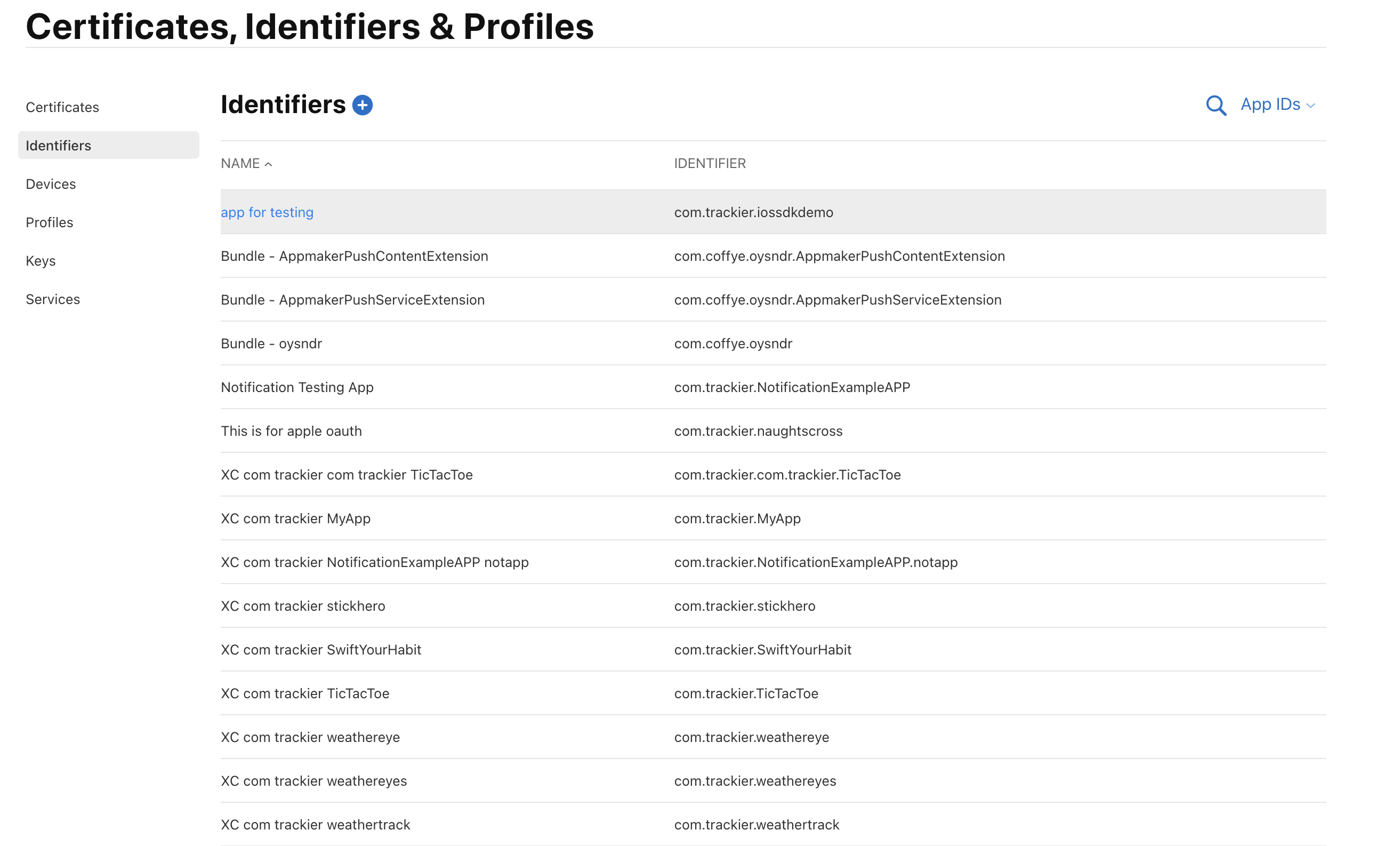
2.2. Go to Certificates, Identifiers & Profiles.
2.3. Click Identifiers.
2.4. Select your App ID (your app's bundle ID/package name).
Step 3: Configure Push Notifications
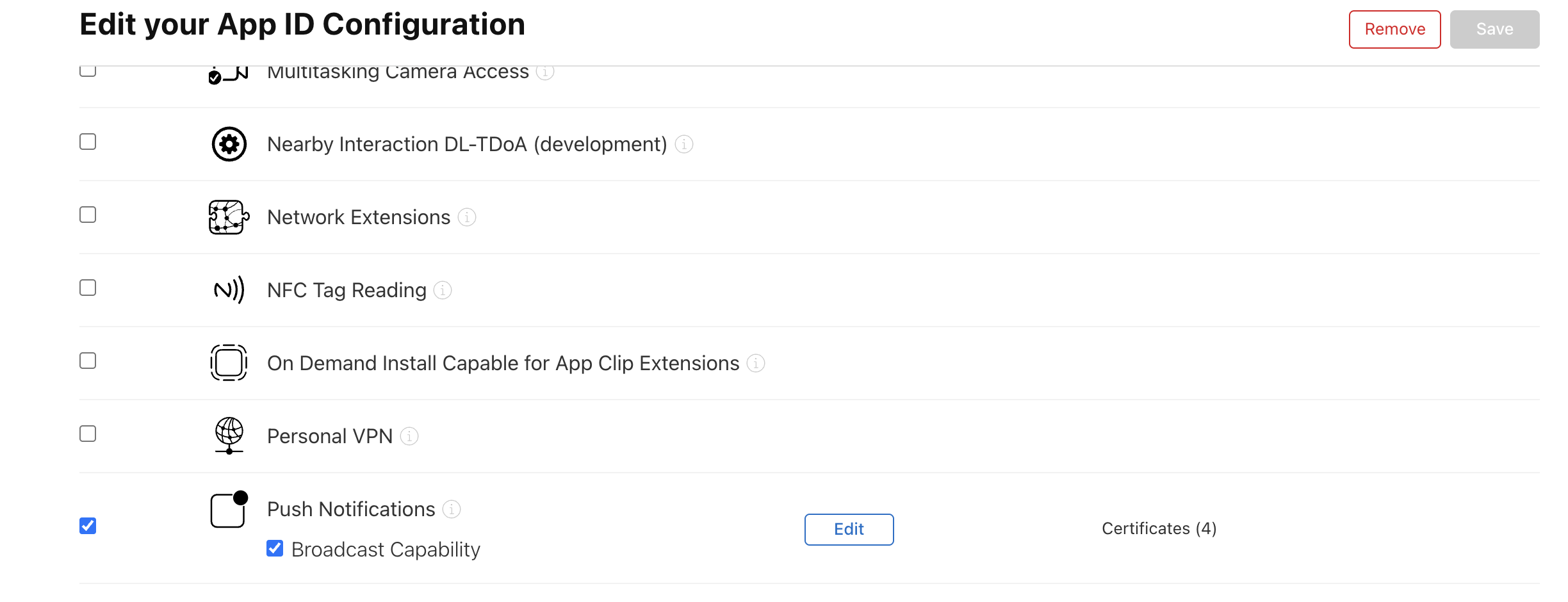
3.1. After clicking your App ID, you'll see the App ID Configuration page.
3.2. Scroll to Capabilities section.
3.3. Check Push Notifications.
3.4. Click Configure.
Step 4: Upload Certificate and Download .cer
4.1. In the Push Notifications configuration screen, choose:
- Production SSL Certificate (for App Store/Production)
- Click Create Certificate
4.2. Click Choose File and upload the .certSigningRequest file from Step 1.
4.3. Click Continue.
4.4. Click Download to save the .cer file.
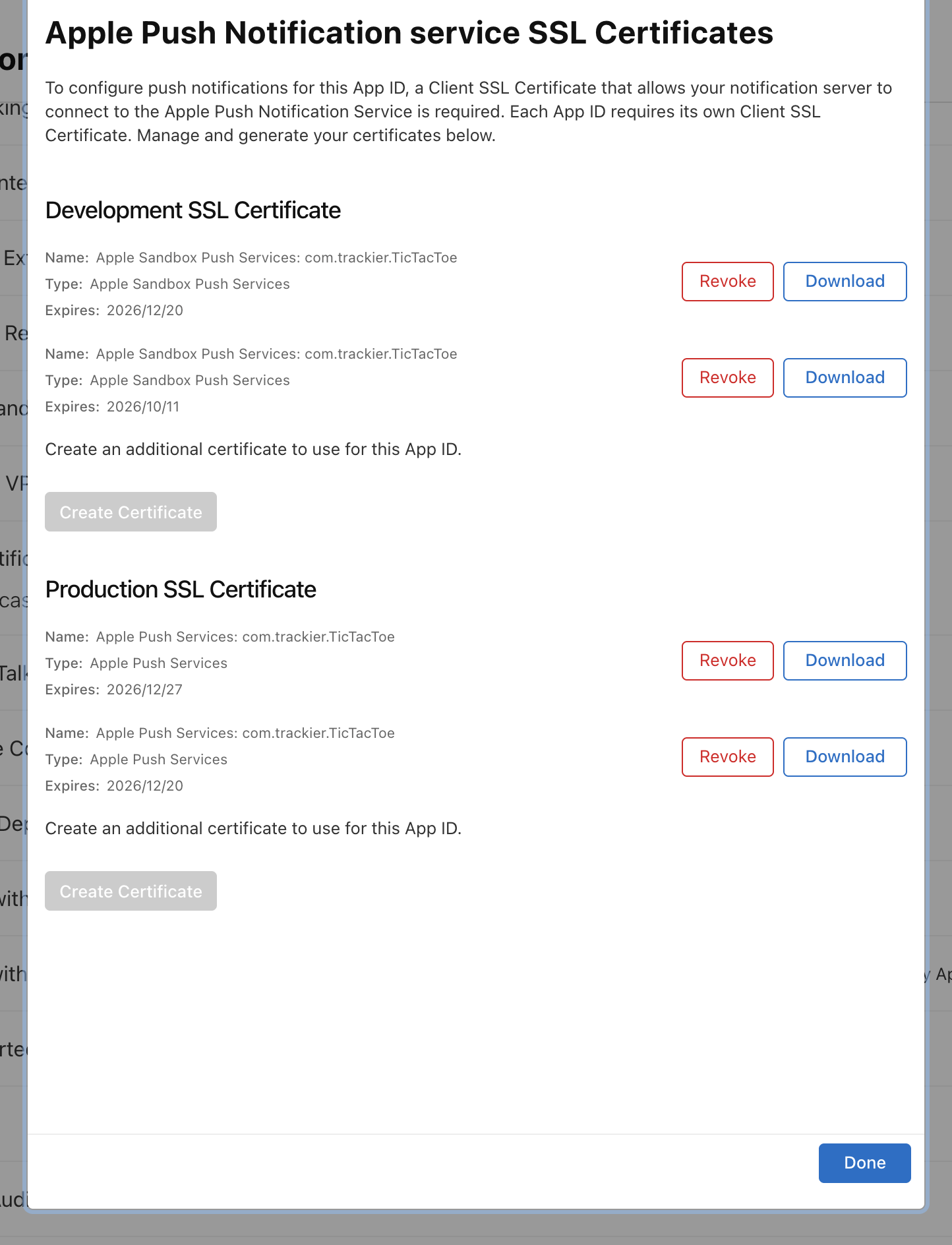
Step 5: Go to Keychain and Export as .p12
5.1. Double-click the downloaded .cer file to open it in Keychain Access.
5.2. In Keychain Access, click My Certificates in the left sidebar.
5.3. Find your Push Notification certificate (e.g., "Apple Push Services: com.yourapp.package").
5.4. Right-click on the certificate → Select Export.
5.5. Save as:
- File Format: Personal Information Exchange (.p12)
- Enter a password (you will need this later)
- Click Save
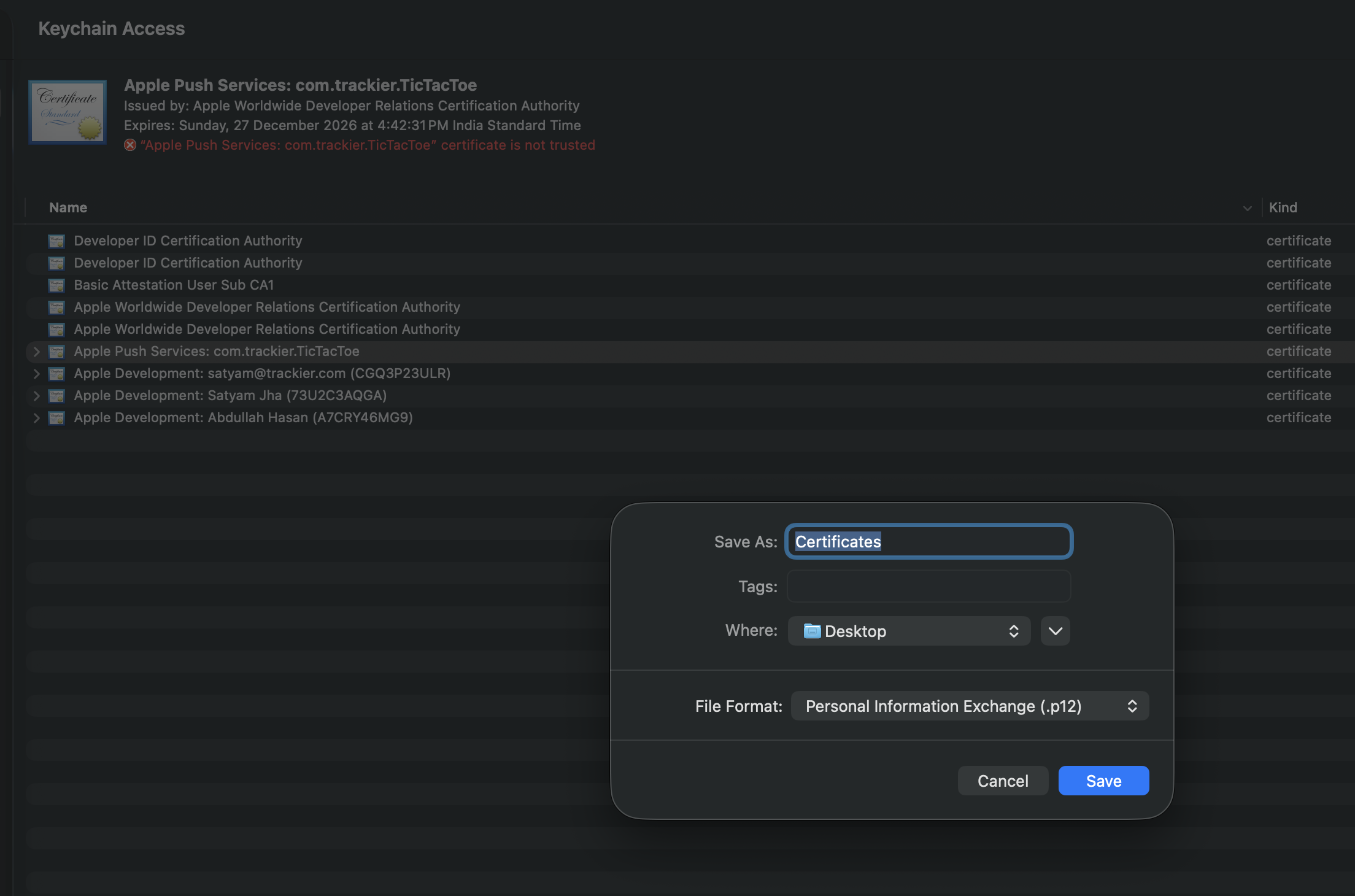
Step 6: Upload .p12 to Apptrove Panel
6.1. Log in to your Apptrove Panel.
6.2. Go to Settings > Uninstall Tracking.
6.3. Select your iOS app.
6.4. Click Upload and select the .p12 file.
6.5. Enter the password you created in Step 5.
6.6. Click Save.
Step 7: Configure in Xcode
7.1. Open your project in Xcode.
7.2. Select your app Target → Signing & Capabilities tab.
7.3. Click + Capability → Add Push Notifications.
7.4. Click + Capability again → Add Background Modes.
7.5. Check Remote notifications.
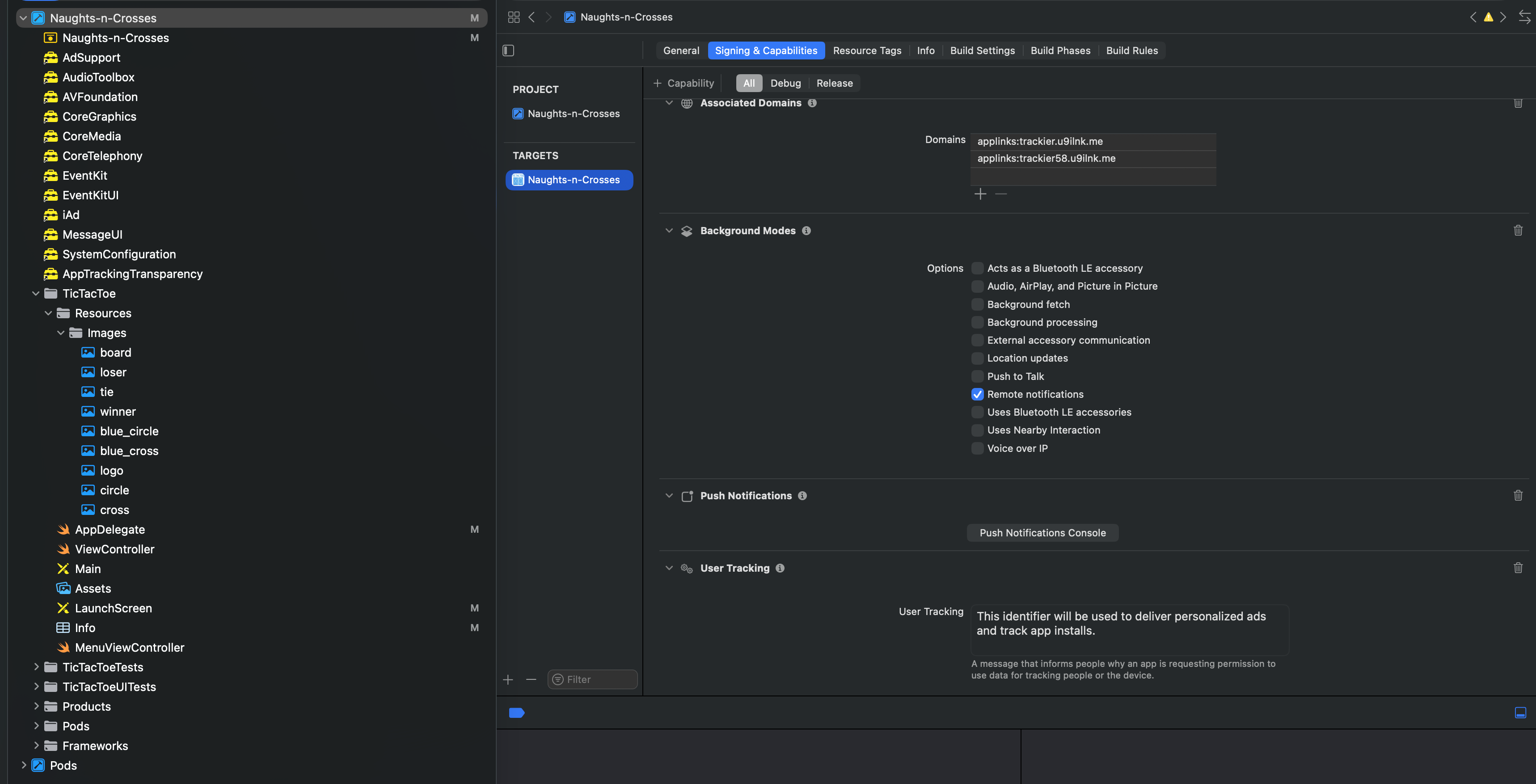
Step 8: Add User Permission in Info.plist
8.1. Open your project in Xcode.
8.2. Open the Info.plist file.
8.3. Add the following key and description:
Key: NSUserNotificationsUsageDescription
Value: We need permission to send you notifications and track uninstalls.
You can also add it in the Source Code view:
<key>NSUserNotificationsUsageDescription</key>
<string>We need permission to send you notifications and track uninstalls.</string>
This permission message will be shown to users when your app requests notification access.
Step 9: Send Token to Apptrove SDK
Add this code to your Flutter app's main.dart:
- ✓ Apptrove SDK (Recommended)
- Trackier SDK (Deprecating August 2026)
import 'dart:io';
import 'package:flutter/material.dart';
import 'package:apptrove_sdk_flutter/apptrove_sdk_flutter.dart';
import 'package:firebase_core/firebase_core.dart';
import 'package:firebase_messaging/firebase_messaging.dart';
import 'firebase_options.dart';
void main() async {
WidgetsFlutterBinding.ensureInitialized();
await Firebase.initializeApp(
options: DefaultFirebaseOptions.currentPlatform,
);
runApp(MyApp());
}
class MyApp extends StatefulWidget {
_MyAppState createState() => _MyAppState();
}
class _MyAppState extends State<MyApp> {
void initState() {
super.initState();
_initializeApptroveSDK();
}
Future<void> _initializeApptroveSDK() async {
AppTroveSDKConfig config = AppTroveSDKConfig("YOUR_SDK_KEY", "production");
AppTroveFlutterSdk.initializeSDK(config);
if (Platform.isIOS) {
await _getAndSendApnsToken();
}
}
/// Get and send APNs token for iOS
Future<void> _getAndSendApnsToken() async {
if (!Platform.isIOS) {
return;
}
try {
final messaging = FirebaseMessaging.instance;
NotificationSettings settings = await messaging.requestPermission(
alert: true,
badge: true,
sound: true,
);
if (settings.authorizationStatus == AuthorizationStatus.authorized) {
print('Notification permission granted, getting APNs token...');
} else {
print('Notification permission denied: ${settings.authorizationStatus}');
}
String? apnsToken;
int retryCount = 0;
const maxRetries = 3;
const retryDelay = Duration(seconds: 2);
while (apnsToken == null && retryCount < maxRetries) {
try {
apnsToken = await messaging.getAPNSToken();
print('APNs Token attempt ${retryCount + 1}: ${apnsToken ?? 'null'}');
} catch (e) {
print('Error getting APNs token: $e');
}
if (apnsToken == null) {
retryCount++;
if (retryCount < maxRetries) {
print('APNs token not ready, retrying in ${retryDelay.inSeconds}s...');
await Future.delayed(retryDelay);
}
}
}
if (apnsToken != null && apnsToken.isNotEmpty) {
print('Raw APNs Token: $apnsToken');
AppTroveFlutterSdk.sendAPNToken(apnsToken);
print('APNs Token sent to Apptrove successfully');
} else {
print('Failed to get APNs token after $maxRetries retries (common on simulator; test on device)');
}
} catch (e) {
print('Error getting APNs token: $e');
}
}
Widget build(BuildContext context) {
return MaterialApp(
title: 'Your App',
home: Scaffold(
appBar: AppBar(title: Text('Apptrove SDK')),
body: Center(child: Text('Apptrove SDK Initialized')),
),
);
}
}
import 'dart:io';
import 'package:flutter/material.dart';
import 'package:firebase_core/firebase_core.dart';
import 'package:firebase_messaging/firebase_messaging.dart';
import 'package:trackier_flutter_sdk/trackier_flutter_sdk.dart';
import 'firebase_options.dart';
void main() async {
WidgetsFlutterBinding.ensureInitialized();
await Firebase.initializeApp(
options: DefaultFirebaseOptions.currentPlatform,
);
runApp(MyApp());
}
class MyApp extends StatefulWidget {
_MyAppState createState() => _MyAppState();
}
class _MyAppState extends State<MyApp> {
void initState() {
super.initState();
_initializeTrackierSDK();
}
Future<void> _initializeTrackierSDK() async {
TrackierSDKConfig trackerSDKConfig = TrackierSDKConfig(
"YOUR_SDK_KEY",
"production"
);
Trackierfluttersdk.initializeSDK(trackerSDKConfig);
if (Platform.isIOS) {
await _getAndSendApnsToken();
}
}
Future<void> _getAndSendApnsToken() async {
if (!Platform.isIOS) {
return;
}
try {
final messaging = FirebaseMessaging.instance;
// Request notification permissions
NotificationSettings settings = await messaging.requestPermission(
alert: true,
badge: true,
sound: true,
);
if (settings.authorizationStatus == AuthorizationStatus.authorized) {
print('Notification permission granted, getting APNs token...');
} else {
print('Notification permission denied: ${settings.authorizationStatus}');
}
// Get APNs token with retry logic
String? apnsToken;
int retryCount = 0;
const maxRetries = 3;
const retryDelay = Duration(seconds: 2);
while (apnsToken == null && retryCount < maxRetries) {
try {
apnsToken = await messaging.getAPNSToken();
print('APNs Token attempt ${retryCount + 1}: ${apnsToken ?? 'null'}');
} catch (e) {
print('Error getting APNs token: $e');
}
if (apnsToken == null) {
retryCount++;
if (retryCount < maxRetries) {
print('APNs token not ready, retrying in ${retryDelay.inSeconds}s...');
await Future.delayed(retryDelay);
}
}
}
if (apnsToken != null && apnsToken.isNotEmpty) {
print('Raw APNs Token: $apnsToken');
Trackierfluttersdk.sendAPNToken(apnsToken);
print('APNs Token sent to Apptrove successfully');
} else {
print('Failed to get APNs token after $maxRetries retries (common on simulator; test on device)');
}
} catch (e) {
print('Error getting APNs token: $e');
}
}
Widget build(BuildContext context) {
return MaterialApp(
title: 'Your App',
home: Scaffold(
appBar: AppBar(title: Text('Trackier SDK')),
body: Center(child: Text('Trackier SDK Initialized')),
),
);
}
}
Step 10: Testing Uninstall Tracking
Local APN tokens do NOT work for uninstall tracking testing. You must upload your app to TestFlight and test with TestFlight APN tokens.
Testing with TestFlight
To properly test uninstall tracking, follow these steps:
- Upload your app to TestFlight via App Store Connect
- Install the app from TestFlight on a physical device
- Launch the app and grant notification permissions
- Capture the APN token using one of these methods:
Method 1: Send Token via Custom Event Parameter
Add this code to capture and send the token for testing purposes:
- ✓ Apptrove SDK (Recommended)
- Trackier SDK (Deprecating August 2026)
// After getting APN token in your AppDelegate
void sendTokenForTesting(String apnsToken) {
  // Send to Apptrove SDK
  AppTroveSDK.sendAPNToken(apnsToken);

  // TESTING ONLY: Send token via custom event parameter
  AppTroveEvent testEvent = AppTroveEvent("apn_token_test");
  testEvent.param1 = apnsToken;  // Send token in param1
  AppTroveSDK.trackEvent(testEvent);
}
// After getting APN token in your AppDelegate
void sendTokenForTesting(String apnsToken) {
  // Send to Trackier SDK
  TrackierSDK.sendAPNToken(apnsToken);

  // TESTING ONLY: Send token via custom event parameter
  TrackierEvent testEvent = TrackierEvent("apn_token_test");
  testEvent.param1 = apnsToken;  // Send token in param1
  TrackierSDK.trackEvent(testEvent);
}
Sending the APN token via a custom event parameter allows you to:
- Verify the token is being generated correctly
- See the token value in your dashboard for debugging
- Confirm the SDK is properly initialized and tracking events
Method 2: Check Xcode Console Logs
Run your app on a physical device (Simulator doesn't support APNs).
Check Xcode console logs. You should see:
APN Token: b0adf7c9730763f88e1a048e28c68a9f806ed032fb522debff5bfba010a9b052
Apn token Api response saved successfully
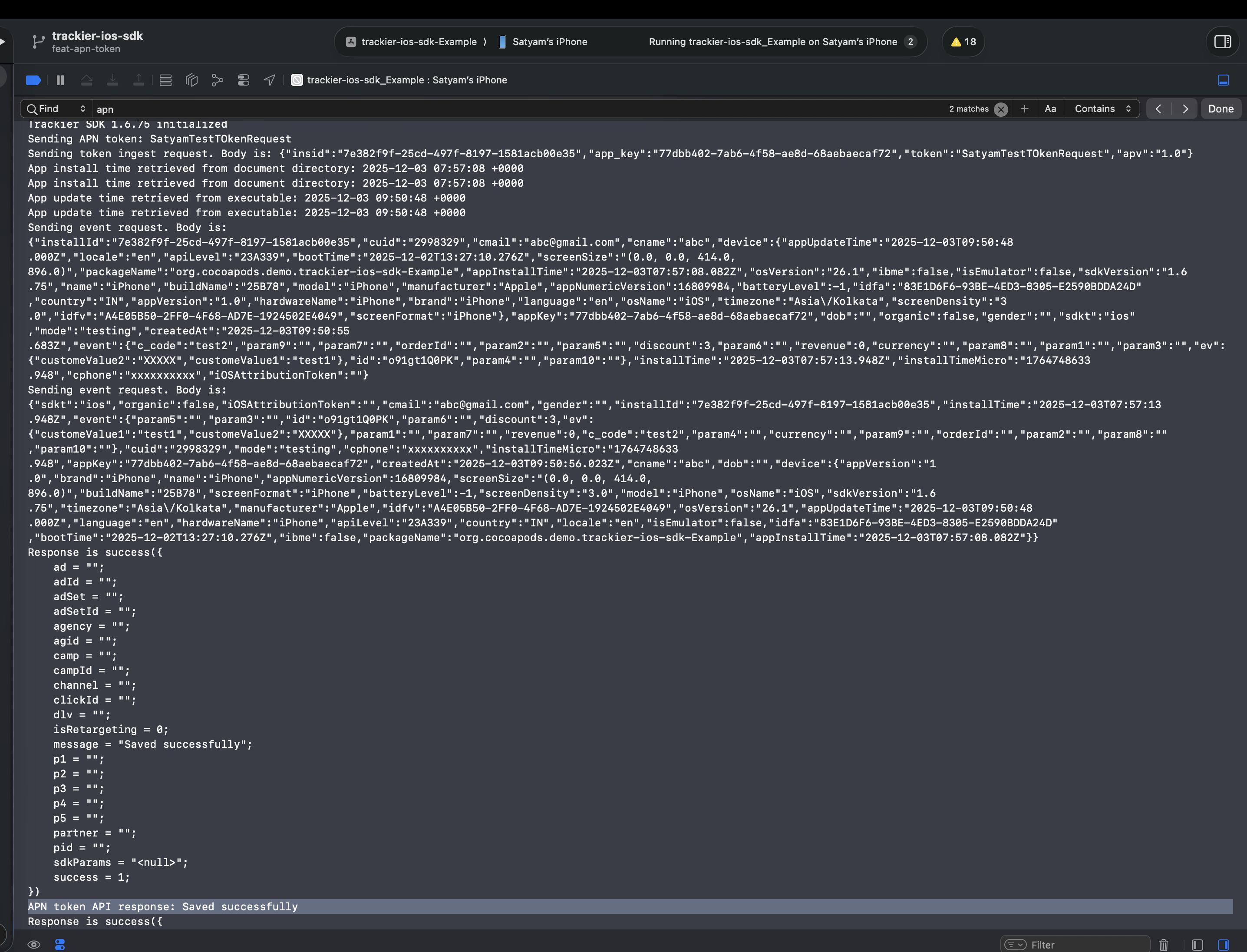
| Success: "Apn token Api response saved successfully"
| Error: If you see an error message, check the troubleshooting section below.
Verify Token in Dashboard
After sending the token, verify it in your Apptrove dashboard:
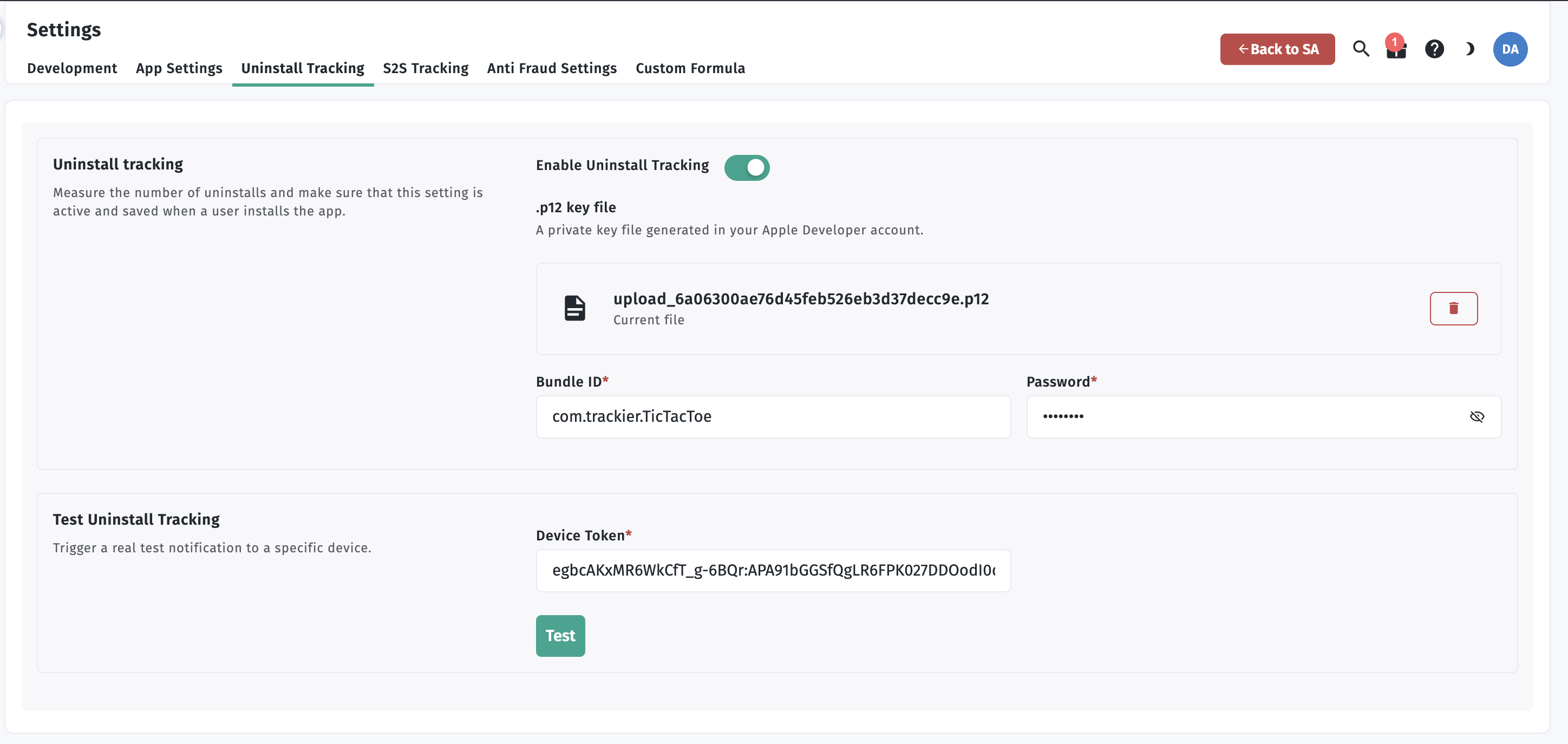
- Go to Apptrove Panel > Settings > Uninstall Tracking
- Verify your iOS app is configured
- Check that the .p12 certificate is uploaded
- Confirm tokens are being received in the logs
- Upload app to TestFlight
- Install from TestFlight on physical device
- Launch app and grant notification permission
- Check Xcode logs for APN token
- Verify "Apn token Api response saved successfully" message
- Check Apptrove dashboard for token receipt
- Uninstall app and wait 9+ days to see uninstall event
Troubleshooting
Issue: Token Not Generated
Check:
- Push Notifications capability is enabled in Xcode
- Testing on physical device (not Simulator)
- User granted notification permission
Issue: "API Response Failed" Error
Check:
- .p12 certificate uploaded to Apptrove panel
- Password is correct
- Using Production certificate for App Store builds
- SDK is initialized before calling
sendAPNToken
Issue: User Denied Notification Permission
Solution: User must enable in Settings > [Your App] > Notifications
Issue: Uninstalls Not Appearing in Dashboard
Remember: Takes 9+ days to appear for production builds.
Complete Flow Summary
- Keychain Access → Request Certificate → Save
.certSigningRequestfile - Apple Developer Portal → Identifiers → Select your App ID
- Configure Push Notifications → Enable and click Configure
- Upload Certificate Request → Download
.cerfile - Keychain Access → Export
.ceras.p12with password - Apptrove Panel → Upload
.p12file + password - Xcode → Enable Push Notifications + Background Modes
- Info.plist → Add user permission description
- Flutter App → Call
AppTroveFlutterSdk.sendAPNToken(token)orTrackierfluttersdk.sendAPNToken(token)(per your SDK) - Check Logs → Verify "Apn token Api response saved successfully"
SDK Method
sendAPNToken(token)
Send the APN token to Apptrove for uninstall tracking.
Usage (choose your SDK):
// Apptrove SDK
if (Platform.isIOS) {
  AppTroveFlutterSdk.sendAPNToken("your_apn_token_string");
}

// Trackier SDK
if (Platform.isIOS) {
  Trackierfluttersdk.sendAPNToken("your_apn_token_string");
}
When to call: After SDK initialization, in your Flutter app's initialization flow.
For support, contact support@apptrove.com.